A safe place to stay, so patients can focus on getting well
In Chiang Mai and Bangkok, our patient houses provide accommodation, daily meals and transport, plus on-site staff who advocate, translate, and help patients and caregivers navigate the hospital system.
Patient houses
Once patients arrive in Chiang Mai or Bangkok, they are housed in the BCMF-B.K. Kee Patient House or BCMF Bangkok Patient House, respectively, or with a partner organisation. Patient houses provide safe accommodation and transportation, daily meals, and other basic facilities for patients and their caregivers, allowing them to focus on treatment and recovery without worrying about these daily living needs. Patient house staff support patients throughout their treatment, advocating for patients, communicating with hospital staff, translating, and helping patients and caregivers navigate the hospital system. As they live on-site, patient house staff also help patients as needed with wound cleaning and other medical care while also maintaining the house and supervising patient activities.
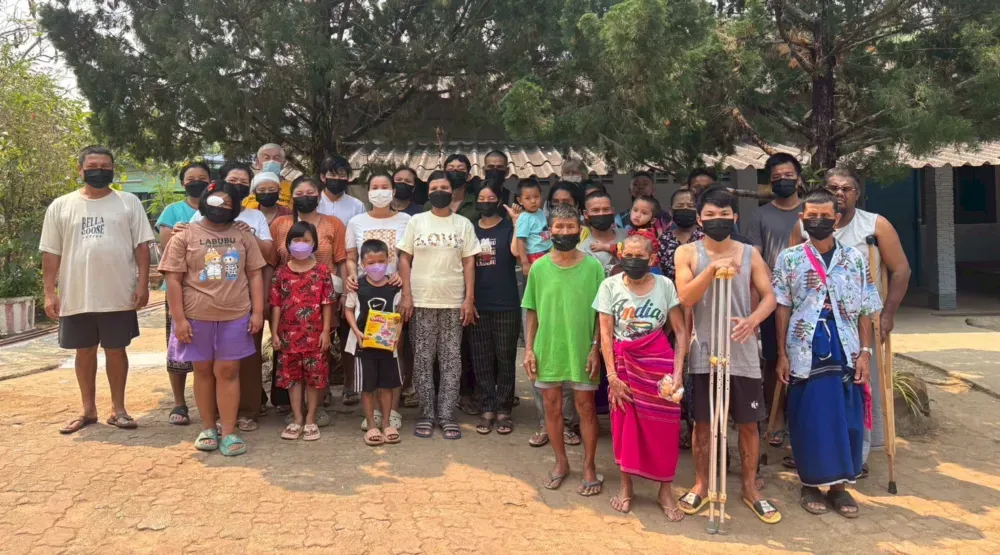
Patients, caregivers and staff gather outside a BCMF patient house, where families stay together for the length of a patient's treatment.
Patients staying at the BCMF Bangkok Patient House are primarily cardiac patients who do not require follow-up appointments or who can attend follow-up appointments at Mae Sot Hospital. They are generally admitted upon arriving to Bangkok and can return as soon as they are discharged. Therefore, patients' caregivers are more often the residents at the BCMF Bangkok Patient House, and their stays usually last days or just a few weeks.
In contrast, residents of the BCMF-B.K. Kee Patient House in Chiang Mai stay for around 20 days, although some require longer stays of six months to a year due to the need for multiple follow-up appointments and difficulty travelling caused by the ongoing civil war in Burma. With patients and caregivers coming from various backgrounds, ethnicities and locations, working together helps to break down barriers and create a sense of community. Most patients and caregivers learn a bit of each other's languages, in addition to learning about each other's diagnoses, daily lives, and livelihoods. They also have the opportunity to take part in recreational activities together and join educational workshops and trainings. Reproductive health and rights workshops, Child Protection and Child Rights workshops, and other trainings are held periodically at the BCMF-B.K. Kee Patient House to educate patients and their caregivers, as well as patients, caregivers, and staff from partner organisations' safe houses.